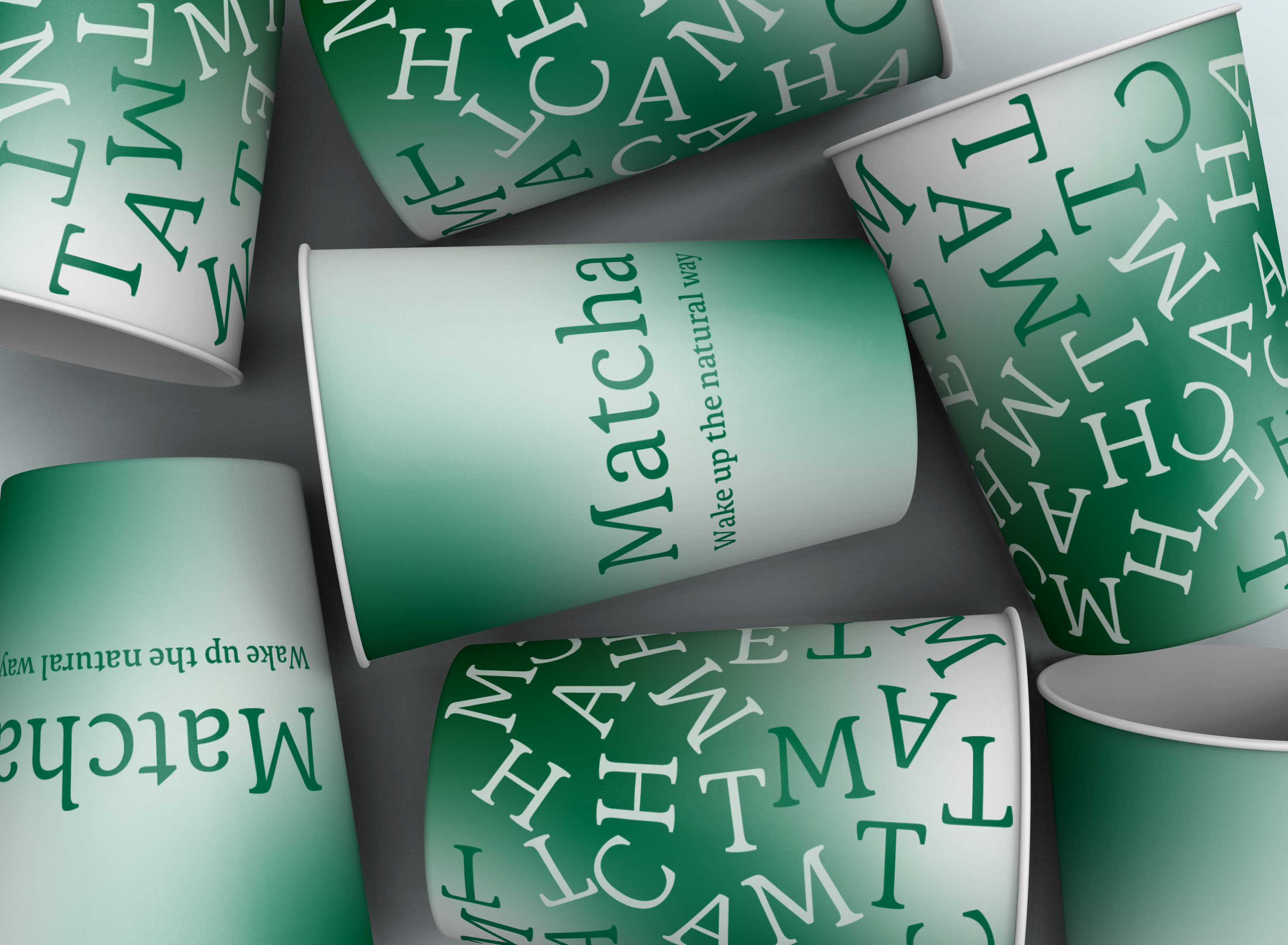
Reishi
About
Reishi is a soft humanist serif designed with warmth, rhythm and readability in mind. With low contrast and organic forms, it performs surprisingly beautifully at small text sizes while preserving its calligraphic details. The earliest version of Reishi was drawn over a decade ago in The Hague, and the typeface has since evolved into a mature, considered family without losing its innocent and naïve feel.
The letterforms are inspired by the quirky shapes of mushrooms, resulting in characters that feel grounded, tactile, and natural. Reishi carries a quiet sense of storytelling, reminiscent of fairy tales, fantasy books, and imagined worlds. It is a versatile serif that combines comfort and personality, inviting the reader in and letting the story unfold.
Overview
Black
ISO 3166–1 ALPHA–3
Notre-Dame de Paris
Bold
STAR WARS REBELS
AS Prix-lès-Mézières
SemiBold
LARA FLYNN BOYLE
William Shakespeare
Забравени Царства
Medium
ORLANDO, FLORIDA
Sarah Michelle Gellar
Regular
ROMANS-SUR-ISÈRE
Space Shuttle Atlantis
Book
ZENLESS ZONE ZERO
Dark Night of the Soul
Лабиринтът на Пан
In quel campo si trovano funghi Reishi in abbondanza.
In quel campo si trovano funghi Reishi in abbondanza.
In quel campo si trovano funghi Reishi in abbondanza.
In quel campo si trovano funghi Reishi in abbondanza.
In quel campo si trovano funghi Reishi in abbondanza.
In quel campo si trovano funghi Reishi in abbondanza.
Book
ANDROMEDA
Anne McLaren
Black
БАБА ВАНГА
Главен Герой
Regular
MARCO POLO
David Helfgott
Bold
ГРЕЙС КЕЛИ
Селена Гомез
Book
Matango is a 1963 Japanese horror film directed by Ishirō Honda. The film stars Akira Kubo, Kumi Mizuno and Kenji Sahara. Partially based on William Hope Hodgson’s short story ‘The Voice in the Night’, it centres on a group of castaways on an island who are unwittingly altered by a local species of mutagenic mushrooms. The film was released directly to video in the United Kingdom as Fungus of Terror and an abridged version aired on television in the United States with the title Attack of the Mushroom People.
SemiBold
The terms ‘mushroom’ and ‘toadstool’ go back centuries and were never precisely determined. During the 15th and 16th centuries, the terms mushrom, mushrum, muscheron, mousheroms, mussheron were used toghether. The term ‘mushroom’ and its variations may have been derived from the French word mousseron in reference to moss (mousse). Delineation between edible and poisonous fungi is not clear-cut, so a ‘mushroom’ may be edible, poisonous, or unpalatable. The word toadstool appeared first in 14th-century England as a reference for a stool for toads, possibly implying an inedible poisonous fungus, an association it carries in modern terminology.
Book
Ganoderma is a genus of polypore fungi in the family Ganodermataceae that includes about 80 species, many from tropical regions. They may be called shelf mushrooms or bracket fungi and have a high genetic diversity. Ganoderma can be differentiated from other polypores because they have a double-walled basidiospore. They are used in traditional Asian medicine. Ganoderma lucidum, commonly known as the Reishi, varnished conk, lacquered bracket, or ling chih, is a red-colored species of Ganoderma with a limited distribution in Europe and parts of China, where it grows on decaying hardwood trees. Ganoderma are characterized by basidiocarps, which are large, perennial, woody brackets also called conks. They are lignicolous and leathery either with or without a stem. The fruit bodies typically grow in a fan-like or hoof-like form on the trunks of living or dead trees. They have double-walled, truncate spores with yellow to brown ornamented inner layers.
SemiBold
Лъвската грива (на английски: The Adventure of the Lion’s Mane) е разказ на писателя Артър Конан Дойл за известния детектив Шерлок Холмс. Включен е в книгата „Архив на Шерлок Холмс“, публикувана през 1927 година. Шерлок Холмс е спрял да разследва престъпления и води спокоен живот в малка си вила на брега на Ламанша. Холмс отглежда пчели и се наслаждава на отдиха. Близо до вилата му има малко частно училище, чийто директор е господин Харолд Стакхърдс. В края на юли, след силна буря, Холмс среща на брега Стакхърдс, който се готви да поплува. Изведнъж, те виждат един от учителите на училището, господин Макферсън. Макферсън залита като пиян и след това пада с отчаян вопъл. Когато Холмс и Стакхърдс дотичват до него, той умира в ръцете им, успявайки само да изкрещи: „Лъвската грива!“.

Medium
GERMANIUM
Diseño gráfico
SemiBold
РИО ГРАНДЕ
Фотография
SemiBold
EARTHINESS
Bill Skarsgård
Medium
ПЪТЕН ЗНАК
Нощна Рокля
Regular
Mushrooms appear in nearly all art forms, including literature, paintings, and graphic arts; and more recently, contemporary art, music, photography, comic books, sculptures, video games, dance, cuisine, architecture, fashion, exhibitions and design. Many species of mushrooms seemingly appear overnight, growing or expanding rapidly. This phenomenon is the source of several common expressions in the English language including ‘to mushroom’ or ‘mushrooming’ (expanding rapidly in size or scope) and ‘to pop up like a mushroom’ (to appear unexpectedly and quickly).
Bold
The stories of City of Saints and Madmen are set in Ambergris, an urban sprawl named for ‘the most secret and valued part of the whale’ and populated by humans after its original inhabitants—a race of mushroom-like humanoids known as grey caps—were violently driven underground. These creatures, though removed from the eccentricities of daily life in Ambergris, continue to cast a shadow over the city with their unexplained nocturnal activities. City of Saints and Madmen: The Book of Ambergris is a collection of fantasy short stories by the author Jeff Vander Meer, set in the metropolis of Ambergris. The same setting was further explored in his other novels Shriek: An Afterword (2006) and Finch (2009).
Regular
Most species of the genus Isaria have been proven to be the anamorphic stage of Cordyceps, such as Isaria tenuipes, which is the anamorphic stage of Cordyceps takaomontana. The taxonomic system of Isaria and its close relatives, such as Mariannaea pruinosa Liang and Microhilum oncoperae Yip & Rath, may be replaced by a unified holomorph nomenclature. As Humber et al. (2013) stated when describing the diversity of the Evlachovaea Borisov & Tarasov group: undoubtedly, Evlachovaea is the anamorphic stage of Cordyceps sensu stricto. Since no anamorphic name within Cordyceps sensu stricto can replace the name Cordyceps s. s., it can be anticipated that this group will be divided into two or even more genera. Conversely, important anamorphic genera such as Lecanicillium, Isaria, and even Beauveria may be replaced. Therefore, under the new International Code of Nomenclature for algae, fungi, and plants, discussing the anamorphic attribution of species is less important than considering the corresponding teleomorphic stage of Cordyceps and its phylogenetic position. Currently, scholars are reconsidering the systematic classification of the Cordycipitaceae family and the genus Cordyceps (personal communication).
Bold
Науката за гъбите се нарича микология. Тя се занимава със систематично изследване на техните генетични и биохимични свойства, таксономията, използването им от хората като източник на храна, лекарства и психотропни вещества, както и опасността от отравяне или инфекция. За първи път описания на гъби са публикувани през 1729 г. в произведението Nova plantarum genera от италианския ботаник Пиер Антонио Микели (1679–1737). Гъбите заедно с бактериите имат голямо значение за биосферата. Те разграждат органичните съединения чрез гниенето и минерализацията и ги довеждат до прости неорганични вещества. Така се затваря хранителната верига и неорганичните вещества могат да се усвоят от зелените растения за изграждане отново на органични съединения. Гъбите, особено почвените, спомагат за повишаване на почвеното плодородие.
Selected Glyphs
aaaaaa
бббббб
čččččč
dddddd
ëëëëëë
йййййй
вввввв
hhhhhh
нннннн
чччччч
kkkkkk
лллллл
nnnnnn
öööööö
gggggg
дддддд
rrrrrr
śśśśśś
tttttt
űűűűűű
vvvvvv
xxxxxx
yyyyyy
zzzzzz
Mushroom Wisdom
“All Fungi are edible.
Some fungi however
are only edible once.”
Terry Pratchet
Bold
DUCATI BRIO
LeBron James
Regular
ЛУННА ФАЗА
Пабло Пикасо
Black
MEDITATIVE
Toyota 4A-GE
Book
УИЛ И ГРЕЙС
Астрофизика
Medium
Toad, known in Japanese as Kinopio, is a character created by Japanese video game designer Shigeru Miyamoto for Nintendo’s Mario franchise. A very prominent red Toad serves as one of Princess Peach’s handlers and appears consistently as a supporting character in the franchise. While most Toads look virtually identical to each other and usually are not named individually, notable exceptions include Captain Toad, Toadette and Toadsworth. The most prominent trait of the Toads is their large, mushroom-like head with colored spots on top.
Black
Have you ever seen mushrooms that grow in a circle on the forest floor? Eerie, right? Our ancestors certainly thought so. There are a ton of tales related to the circular arrangement of fruiting bodies. The fruiting body is one of many parts of the mushroom, consisting of the gills and stem. Some say it’s a gateway to the realm of the fae. For others, it’s a strange attractor for mischievous elves. That said, fairy rings are a perfectly natural phenomenon. They usually only happen when the substrate that grows under the ground is consistent. When the fungal food supply isn’t interrupted, it grows outward, creating a circle in the ground that seems strange to the outside observer. To make matters even stranger, the grass within the circle is often a different color than outside the circle, making it appear supernatural. In fact, in the British Isles, they thought the grass inside the ring was poisonous.
Medium
Pilea peperomioides, the Chinese money plant, UFO plant, pancake plant, lefse plant or missionary plant, is a species of flowering plant in the nettle family Urticaceae, native to Yunnan and Sichuan provinces in southern China. The Scottish botanist George Forrest was the first westerner to collect Pilea peperomioides, in 1906 and again in 1910, in the Cang Mountain range in Yunnan Province. Pilea peperomioides is an evergreen perennial plant, with shiny, dark green, circular leaves up to 10cm (4in) in diameter on long petioles. The leaves are described as peltate—circular, with the petiole attached near the centre. The plant is completely hairless. It grows to around 30cm (12in) tall and wide in the wild. Indoors, it has the potential to grow larger. The stem is greenish to dark brown, usually unbranched and upright, and lignified at the base when mature. In poor growing conditions, it loses its leaves in the lower part of the stem and assumes a distinctive habit. The flowers are inconspicuous.
Black
Enoki mushrooms are 88% water, 8% carbohydrates, 3% protein, and contain negligible fat (table). In a reference amount of 100g (3.5oz), enoki mushrooms provide 37 calories of food energy, and are a rich source (20% or more of the Daily Value, DV) of niacin (46% DV), and pantothenic acid (28% DV), while supplying moderate amounts of thiamine, riboflavin, folate, and potassium (12-19% DV, table). The ideal size to harvest enoki mushrooms is generally recommended to be about 5–10cm (2–4in) long. At that time, the cap should still be tightly closed and the stem should be long and sturdy. If people grow enoki mushrooms at home, they can use a sharp knife or scissors to snip off the mushroom cluster at the base of the stem where it meets the growing medium. It’s important to remove both the mushrooms and any remaining mycelium (the white, thread-like structures) from the growing medium during harvest. This helps prevent decaying, which could negatively impact future mushroom growth.
Stylistic Sets
No Ligatures
Perfectionist
Discretionary Ligatures DLIG
Perfectionist
Default Cyrillic
Митология
Фантастика
Поетически
Литература
Bulgarian Cyrillic SS01
Митология
Фантастика
Поетически
Литература
Default Cyrillic
Обликовање
Добровољац
Serbian Cyrillic SS02
Обликовање
Добровољац
Alt &: Open SS03
Blue & Green